Total Pageviews

Showing posts with label Spirituality. Show all posts

Monday, December 2, 2013

Queen Medb of Rathcroghan

Article contributed by Catriona Kelly, TY Student

Queen Medb of Rathcroghan
Queen Medb (Maeve), Celtic warrior and daughter of the high king of Ireland, Eochaid Feidlech. Famous as the leading heroine in the story of the Táin Bó Cuailgne (The Cattle Raid of Cooley), and one of Ireland's most popular attributes in mythological tales. Having received the province of Connacht as a gift from her father, no king could rule there unless they married the Queen Maeve. Maeve had many husbands, each marriage with a tale of its own. A woman of great power and desire. Queen Maeve lived an interesting and fascinating life.

Maeve’s father first married her to Conchobar Mac Nessa, king of Ulster because he had supposedly killed Conchobar's father in battle. She had one son, Glaisne however the marriage did not last and she left him. Instead Maeve’s sister, Eithne married Conchobar. In rage, Maeve murdered her own sister. Her sister had been pregnant at the time and miraculously the baby, named Furbaide, survived. 

Maeve’s husband in the Ulster cycles, Aillil Mac Máta whom she had, had an affair with prior to their marriage became king of Connacht and they had seven sons and one daughter together. All of the sons called Maine. They originally all had different names however when Maeve approached a druid and asked which of her sons would in the future kill her earlier husband, Conchobar whom she wanted dead. The druid replied, "Maine". Maeve became concerned as none of her sons were called Maine. Therefore she renamed all of her seven sons. The prophecy was fulfilled, when her son Maine Andoe went on to kill Conchobar. 

One night, Maeve and Aillil were engaging in pillow talk, discussing each other’s wealth. What started out as a discussion soon ended in an argument. Disputing which of the two had the most wealth. They compared every piece of land, all of their animals, jewels and most prized possessions. They were equal in every aspect, except Aillil had one magnificent white horned bull, Finnbennach, that Maeve could not match. 

Maeve was enraged and decided that there was only one bull on the island that could compete with Finnbennach. And that bull was the brown bull Donn Cúailgne, owned by a chieftain, Dáire Mac Fiachna. Maeve sent messangers to Dáire offering wealth, land and other valuables in return for the loan of this incomparable bull. Dáire agreed to the offer. They feasted over the agreement. Only when some of Meave's messengers were having a drunken conversation did they let slip in the company of one of Dáires servants that even if Dáire denied them Donn Cúailgne they would have forcefully taken him anyways. When this news reached Dáire he was angered and cancelled the arrangement. Maeve did not stand down and went to battle with him. This marked the battle between the provinces of Connaught and Ulster.

An Ulster warrior called Cúchulainn defended Ulster single handed, because the remaining Ulster warriors were afflicted by the curse of Macha. The curse was that the men of ulster shall fall weak and helpless in the hour of need. Cúchulainn was ruled out from this curse because he was not a man at the time the curse was forced upon ulster. During the battle, Maeve’s army lost confidence. Maeve offered her daughter's hand to her army if they succeeded in defeating Cúchulainn. 

It was soon the turn of the great warrior Ferdia to face Cúchulainn. Ferdia and Cúchulainn were foster brothers and neither of them wanted to fight - however neither of them wanted to be dishonoured by refusing to fight. After three days of fighting it was Cúchualainn who succeeded in defeating his brother. Despite Maeve’s army being devastated, she somehow secured the brown bull of Cooley. The Donn Cúailgne was brought back to Cruachan to fight Aillil's white bull. The white bull was defeated and impaired on Donn Cúailgne's horns. Donn Cúailnge travelled back home to Cooley and later died from his wounds. The Táin Bó Cúailgne is one of the most remarkable mythological tales in the Irish language.

In Queen Maeve’s later years, she often went to bathe in the pool on Inchcleraun, and island on lough Ree. Furbaide, the surviving son of Maeve’s sister Eithne, sought revenge for his mother and killed Maeve while she bathed. Queen Maeve is said to be buried in her home of Rathcroghan, County Roscommon.

Find out more - Go to www.QueenMaeve.org 

Friday, September 27, 2013

Queen Medb of Rathcroghan

A Woman’s Place: the Functions of Queen Medb in Irish Gaelic Literature
‘Celtic’ warrior Queen of Connacht, a sovereignty Goddess, guardian and initiator, with fierce sexual prowess and an arrogance that led her men to downfall. This is the general vernacular perception and discussion of Medb today (according to the author’s daily experience managing the Rathcroghan Visitor Centre), but what is this perception based on? This essay will examine references to the Queen Medb (Maeve) character in Irish literary sources, and catalogue the recorded themes. These are by no means comprehensive listings, but an adequate sampling as space allows for the purposes of a foundational essay. Further research is needed on Medb, and particularly interesting will be that which looks at the social, political, and cultural context in which her tales were recorded, and the influence that Gaelic culture wrought on the character development of the Connacht Queen.
 Full article by Lora O'Brien is available for download on the Academia.edu website:
 www.academia.edu/4180492/A_Womans_Place_the_Functions_of_Queen_Medb_in_Irish_Gaelic_Literature

Let us know what you think!

Goddess Gathering Roscommon November 2013

Goddess Gathering Ireland 2013, in the Spiritual Capital of Connacht - Rathcroghan

Friday 22nd - Sunday 24th November, Irish Goddesses come home for the Goddess Gathering Ireland 2013!

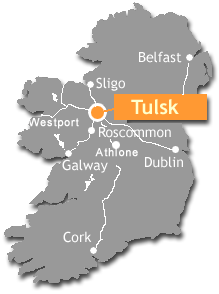
Rathcroghan Visitor Centre presents the third ‘Spiritual Capital of Connacht’ Conference Weekend, in Tulsk, Co. Roscommon, home of the Celtic Warrior Queen Medb (Maeve) and Battle Goddess, the Mórrigan.  Our theme this year is theGoddess Gathering, and we are inviting all who love the rich history, mythology, and culture of the strong Irish Goddess (and Irish women!) to come home, and join our Goddess Gathering spiritual conference in Roscommon 2013.

The weekend programme covers a wide range of interests - from the academic to the feminist to new age and celtic spirituality - and we actively encourage cross discipline discussion and learning throughout the event.

Our presenters and attendees are travelling from Ireland, and all over the world, to learn the Irish names, enjoy Irish food, and make friends with like minded people.  This event is a celebration of Irish culture and heritage, as well as an exploration of Goddess culture and studies in Ireland, and is fast becoming one of the most interesting things to do in Ireland.

If you're planning a trip this year, but don't know yet what to do in Ireland, this event in Rathcroghan, Ireland's Spiritual Heartland, is one of the most interesting things to do, and unique places to visit, that you can choose.

View the Programme and Speaker Info Here!

Book Your Place Now on www.irishgoddess.com/book-your-place.html

Thursday, May 9, 2013

November 2013 Events in Roscommon

Friday 1st to Sunday 3rd November 2013, Roscommon Writing Festival is on  in Strokestown. This is a weekend celebration of Irish Writing:  Practical Workshops, Historical Literature, Talks, Book Signings, a Book Fair, and Creativite Inspiration. Do you want to get published, or finish your own book this year?

Wednesday 20th to 24th November, the Boyle Musical Society Annual Show is on in St. Joseph's Hall, Boyle, where the musical society will stage their 30th musical production.

Goddess Gathering Ireland 2013

Friday 22nd, Saturday 23rd, and Sunday 24th November 2013, the Goddess Gathering Ireland is on in Tulsk, Co. Roscommon.  The ceremonial and spiritual capital of this region is Rathcroghan – this is the legendary Cruachan, home of Queen Maeve (Medb), palace and sacred centre for the Druids, Kings and Queens of Connacht all through the ages.

On the weekend of November 22nd to 24th, Irish Goddesses can come home for the Gathering Ireland 2013!  Rathcroghan Visitor Centre presents the third ‘Spiritual Capital of Connacht’ Conference Weekend. This special event theme is the Goddess Gathering, and we are inviting all who love the rich history, mythology, and culture of the strong Irish Goddess (and Irish women!) to come home, and join our Goddess Gathering spiritual conference in Roscommon 2013.  View the Website for further details and Booking.

28th November 2013, the Monthly Lecture Series continues at the Rathcroghan Visitor Centre, on the last Thursday of every Month, from 7 to 9pm.

Weekly Roscommon Farmers Market every Friday - Roscommon 10am to 2pm, and Strokestown 10am to 3pm, and every Saturday Boyle 10am to 2pm, and Ballaghaderreen 10am to 2pm.

Monday, February 4, 2013

Free Event in February 2013


On Thursday 28th February, 2pm, Rathcroghan Visitor Centre are hosting a Free event in Tulsk, Co. Roscommon.  This is a talk entitled "Irish Springtime Traditions", a FREE afternoon presentation by Lora O'Brien, author of A Practical Guide to Irish Spirituality.  We'll even throw in the free tea/coffee as part of the deal for that one too.  Did we mention it's Free?!

TO BOOK YOUR PLACE - please Ring us on 071 9639268, or send an Email to info@Rathcroghan.ie.

Roscommon Lamb

Wednesday, January 16, 2013

Goddess Gathering, Roscommon Event Nov 2013

Over at the far end of this year, we have an important spiritual event planned - the Goddess Gathering 2013.  Presenters already confirmed include world famous authors such as Janet Farrar and Gavin Bone, Vivianne Crowley, Stephan Grundy and our own Lora O'Brien.  The event will run from Fri 22nd to Sun 24th November, in Tulsk, Co. Roscommon.  

The event website is a work in progress HERE, but you can register your interest at the Gathering Ireland events guide now.

Imbolg 2013


IMBOLG IN IRELAND
The Gaelic/Celtic feast day, Imbolg, also known as Imbolc, or Lá Fheile Bríd, is the fire festival of springtime, a feast celebrating the end of the winter months, and to encourage the fertility, prosperity and security of the milder springtime.  From Neolithic man to post-Christian Celt this date has been marked in one form or another for over 5,000 years. 
The actual day on which the feast of Brigit, be it Goddess or Saint you honour, varies from the 31st of January to the 4th of February.  Those Romano Celtic nations such as Bretons, Gauls and Britons tended to celebrate this festival according to the Spring equinoctial dates; Celtic Ireland however has a long tradition of marking the date itself, with Brigit’s eve falling on January 31st and Brigit’s Day on February 1st. The difference in attitude between pagan Celt and Roman toward astrology accounts for this difference in tradition.  Whatever the day one chooses to mark, however, the feast of Brigit is celebrated with a common cause.  The Saint Brigit has many of the same characteristics and attributes as her predecessor goddess, (the early Celtic church having deliberately endowed her with them to replace the almost indefatigable worship of Brigit Goddess!).
So what is this festival about? As an Equinoctial date it marks the beginning of the end of winter, a fact of immense significance to Neolithic man who would have gathered at Rathcroghan (Cruachú), or Newgrange (associated with Boann), to light the bonfires with which every feast of moment in the Irish calendar is celebrated.  Those who had survived the harshest part of winter could relax a little – they were likely now to see the summer and plenty.  Livestock would begin to reproduce, and again if they had survived this far, they would probably make it through to summer also.  It was time to start considering repairs to the homesteads, look forward to the hunting and fishing activities of spring/summer, consider pairing off and marrying the tribes' young, look forward to the birth of children conceived during the long winter.

Later on, in the Iron Age as a Gaelic Festival, it is thought that at this time the people were predominantly occupied with issues of Fertility, Love, Marriage, Purity, Cleansing and Healing.  Surviving folk-customs underpin that this time of year was one for lovers, for arranging marriages, for rites of healing, for purifying with water and fire.  The “St. Valentine Day” rituals were originally part of the Brigit Celebrations.  Brigit was the patron of crafts, spinning, weaving, sewing, baking, grinding, mills, health, livestock, the Hearth, cooking.  As art of her “healing” role there are sacred wells and springs all over Ireland and Britain, dedicated to the healing powers of Brigit.  She is also associated with fire rituals: the bonfires lit on Brigit’s eve, plus the tradition of purifying livestock, woman and new born children by passing a burning rush brand over, under and around them.  Grown-ups leapt the bonfire for the same reason. Fire was brought around the house, and water from a sacred well sprinkled around the house, after it has been thoroughly cleaned.  Girdles of rushes, known as Bríd’s Girdle were made, for people and livestock, through which they were passed three times in order to protect against illness.
(See Roscommon Well Wishers on Facebook for local info on holy wells)
Spring Cleaning was a product of these ancient customs.  The house had to be cleaned from top to bottom, and aired, a sensible custom when communal living at close quarters during the winter was the norm; indeed the idea of spring-cleaning probably did help protect against - and get rid of - all manner of germs! Psychologically it symbolised a fresh new season, time to get out and about, move around the countryside again, to give and receive visits.

There's more!  READ THE FULL ARTICLE HERE.
Article contributed by Geraldine Byrne, commissioned for The Mysteries teaching website, Copyright 2002.  Used with permission.

Friday, October 5, 2012

Samhain


We have some interesting events planned for Samhain
Anyone wanting to know the origins of the world famous Halloween celebrations would be well advised to come along..
30th & 31st October 2012

Medb's Samhain,

A performance, telling some of the stories connecting Queen Medb, the warrior queen of Connacht, and the festival of Samhain.
(€5 per person)  2pm


A Tour of the Cave of The Cats,

The spiritual and legendary history of  the cave known at one time as the Hellmouth of Ireland,  Oweynagat and its importance at Samhain.
(€5 per person)    3pm


And only on   Tuesday  30th October 2012

Above Earth, Below Earth

Poetry and  Art Multimedia  Presentation With  poet Michael O’Dea and artist Elaine Leigh. The Poet and Artist explore themes on Megalithic sites, their legends and stories, especially relevant at this time of year at  5pm

Special price on Tuesday for all events.


Monday, January 30, 2012

February 2012 Events in Tulsk


PLEASE NOTE:
THIS POST IS FOR 2012 EVENTS!  For this year, please see January & February Events 2013


St. Brigid’s Cross Workshop
Wednesday 1st February, come any time from 2pm to 4.30pm
Learn how to make these traditional Irish symbols to help bring the healing and strength of St. Brigid, Mary of the Gael, into your life this year.
See different styles and examples, and some of the history and associations of this time of year. Family €10, Individual €4, includes free tea, coffee, and juice for the kids.
Imbolg Candlelit Procession
Community celebration to welcome Spring. Gather in Rathcroghan Carpark at 5pm on Wednesday 1st February, finished by 6pm.
Irish Gods and Goddesses Workshop
Saturday 24th February, 2pm to 5pm - Find your connection with the old Gods of Ireland. Cost €10, includes free tea and coffee.
Tarot Workshop
Sunday 25th February, 2pm to 5pm – practical introduction to the history, use and skill of reading tarot cards. Cost €10, includes free tea and coffee.
Cruachan Crafters - Weekly Meeting
Thursday mornings, 10am to 12noon. Cruachan Aí Heritage centre, Tulsk. Great social networking, creative inspiration and support for all Crafters… what are you waiting for?!
Wool Scrappage Scheme
Do you have any old balls of wool, bits of fabric, or other craft items, lying around and cluttering up your house? Why not clear the air by donating them to the Cruachan Crafters community Wool Scrappage Scheme? All donations kindly received at the Cruachan Ai Centre, Tulsk, and will be utilized in upcoming community projects.

Tuesday, November 22, 2011

Spiritual Conference 2011 in Tulsk


THIS POST IS FOR THE 2011 EVENT!

For Information on the Goddess Gathering 2013, with special guest speakers Dr. Vivianne Crowley, and Janet Farrar, please visit us at www.IrishGoddess.com 
and register your interest through the online form!


Spiritual Capital of Connacht Conference Weekend, Tulsk, Co Roscommon

Event theme is “Connecting with the Land”, and we are delighted to announce our new spiritual conference event in Roscommon:

Since before history the West & Northwest of Ireland has been a place with a spiritual resonance. A place where Christian scholars kept civilisation alive. A place where belief and landscape merge. A place where you can feel things you can’t touch, where you experience an authentic unspoilt nature and timeless faith. A place where you can open your heart and lift your spirits – Ireland’s Spiritual Heartland.

The ceremonial and spiritual capital of this region is Rathcroghan, in County Roscommon – this is the legendary Cruachan, palace and sacred centre for the Druids, Kings and Queens of Connacht all through the ages.

Saturday 26th and Sunday 27th November 2011

€20 for Weekend Ticket!
€15 value Day Pass for Saturday talks, Individual Price = €5 per talk
(Saturday Pre-Booked Day Pass only €12!)


« Deirdre Wadding of Tall Tales Troubadors

Song of the Land. Every place has its own sound and song; listening for it and singing it back to the land forges a connection. Exploring the ‘Song of Amairgin’ from Irish legend, the use of our native language in magical work, and how the land responds!

« Lora O’Brien, Irish Author and Bean Draoí

Goddesses of Connacht: From Medb to the Morrigan, we all know the usual suspects. But what of Flidhais, she of Castlerea sovereignty? What of Gaillimh inion Breasail, and does her aspect have an effect on the many Brazilians who are drawn to the West of Ireland?! And even Mongfind and Cairenn, ancient rivals who between them birthed the Connachta and the Uí Niall clans? Recommended for those who want to explore their feminine side; will include journeying and self development work, along with a healthy dose of Irish heritage information.

« John Sinnott, B.A. Arch, of Irish Heritage Crafts

Sacred Sites: Care and Responsibility. A qualified Archaeologist, Alexandrian 1* and member of Cois Teallaigh Coven in County Roscommon, John has extensive experience working with sacred sites, through both the archaeological and pagan fields. This talk was designed to show that many practices which are viewed as quite standard among pagans, could actually damage the sites we profess to care for.

« Francis De’Venney, of Faol Lia Historical Re-enactment Society

Land and Ancestors. A fascinating insight into the ancient Irish psyche, from an anthropologist and accomplished practitioner of 30+ years experience

« Talas Pái of Roscommon’s Huginn Press

Working With the Wights. The numinous is all around us, from temples and trees to your house and car. In this talk, Talas takes an animistic approach to working with the wights, sidhe, vaettir and other spirits. The talk ranges from theoretical to practical — what the wights are and where they fit into the cosmos to how, where and why to approach and work with them.

« Con Connor of Roscommon’s Druid School

Eachtra, a Celtic dreaming, guided visualisation journey with the Cauldron of Vocation and the Realm of Land. Eachtra is the White Mare as the Celtic Goddess and we journey with her to meet the Ancestor Clan where we get an individual message as spiritual guidance.

« Del Eagle, (Sunday Morning, 2 Talks)

Flower Essences and how they are made, the connection between Earth and Sky

Tantra, the connection between Earth/Body and Spirit

SUNDAY AFTERNOON - 2pm to 5pm
Appointments available with Readers (Tarot, etc) and Healers, therapists.
(Individual Booking Costs will apply!)


Spiritual Capital of Connacht
Conference Weekend, Tulsk, Co Roscommon
Saturday 26th November 2011
TIME
SPEAKER
TOPIC
10am – 10.45am
Deirdre Wadding
Song of the Land
11am – 11.45am
Lora O’Brien
Goddesses of Connacht
12noon – 12.45pm
John Sinnott
Sacred Sites: Care and Responsibility
1pm-2pm
Lunch
Shopping
2pm-2.45pm
Talas Pái
Working with the Wights/Spirits
3pm – 3.45pm
Fran De’Venney
Land and Ancestors
4pm – 5pm
Con Connor
Eachtra, a Celtic dreaming
Individual price - €5 per talk/workshop
Value Day Ticket – just €15!

Spiritual Capital of Connacht
Conference Weekend, Tulsk, Co Roscommon
Sunday 27th November 2011
TIME
SPEAKER
TOPIC
11am – 11.45am
Del Eagle
Tantra Connection
12noon – 12.45am
Del Eagle
Bach Flower Essences
Individual price - €5 per talk/workshop
Value Weekend Ticket – just €20!
(all talks & workshops, Saturday & Sunday)
Sunday Afternoon from 2pm to 5pm
Appointments Available
with Healers and Readers
Individual Booking Costs will apply!
Booking on 071 9639268